When Annual Budgets Limit Growth: Sanna Suvanto-Harsaae on the CFO’s Changing Role
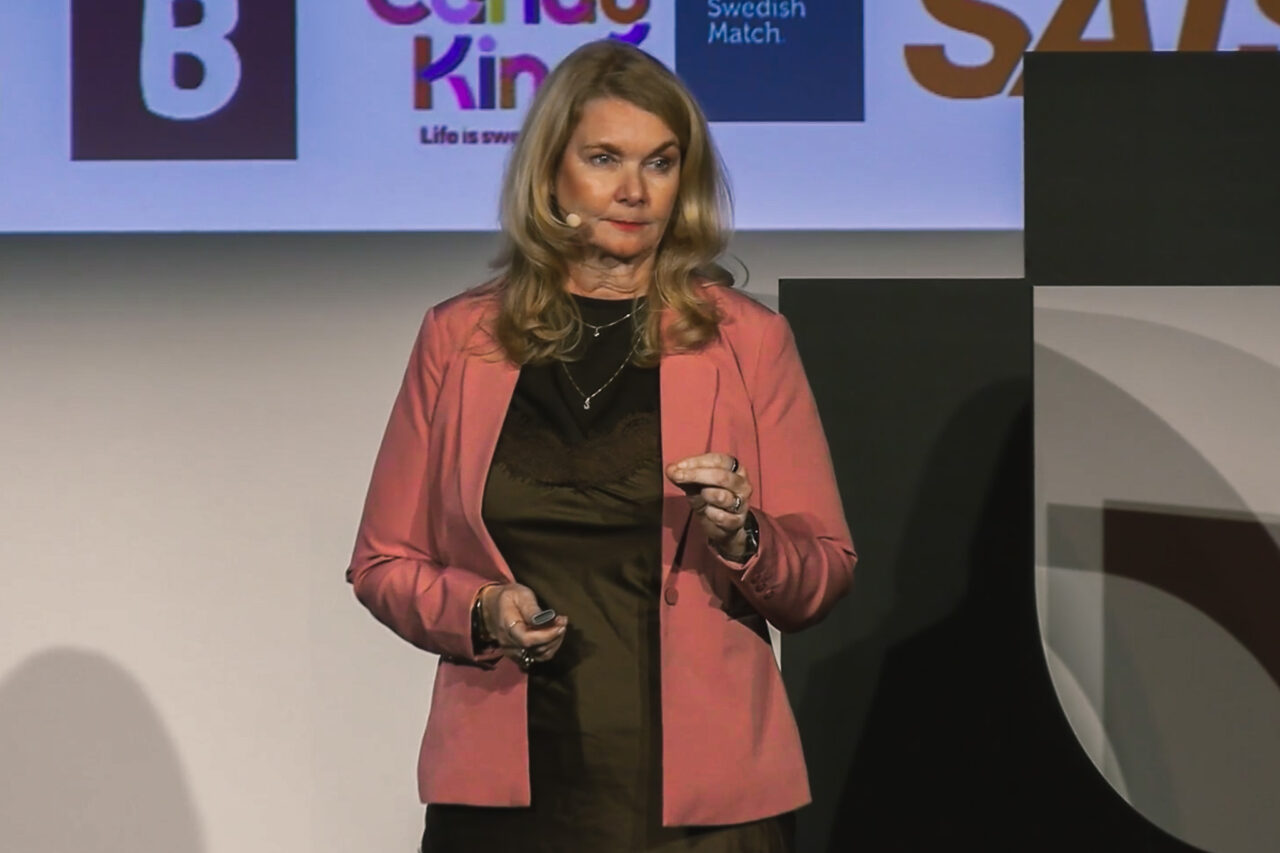
Speaking at Chief of Finance 2026, board professional Sanna Suvanto-Harsaae challenged annual budgeting and the idea that strong financial reporting is enough. Her message to CFOs was to look ahead, question familiar targets and become a true business partner to the CEO.
When a Target Becomes a Ceiling
An annual budget can give a business a target. It can also become a reason to stop pushing once that target has been exceeded. At Professio’s Chief of Finance 2026 in Helsinki, Sanna Suvanto-Harsaae argued that this is one of the risks of treating the budget as the central measure of success.
“I would love to kill budgeting.”
Her criticism centred on annual planning that assumes the calendar year provides a meaningful boundary for business decisions. She pointed to beyond budgeting and continuous budgeting as alternative approaches, while acknowledging that a budget can help a company understand its cost structure.
Suvanto-Harsaae recalled chairing an e-commerce company that was growing by around 30–40 per cent a year. Budgeting was prohibited there to avoid limiting ambition. She illustrated the risk with a business budgeting for 20 per cent growth: at 25 per cent, people might consider the job done, even if further growth remained possible.
The challenge for finance leaders is to recognise when a target helps direct the business and when it begins to constrain its opportunities.
Plan for More Than One Future
Suvanto-Harsaae’s alternative requires more active financial leadership. In the companies she chairs, a budget must be accompanied by at least three scenarios. She urged CFOs to examine the gross margin, considering how changes in sales or costs could affect the business.
“If you do not do scenario management, you’re not doing your job.”
She also challenged the balance between downside risks and upside opportunities. Companies can spend so much time examining what might go wrong that they give too little attention to what could go better. Requiring both sides to be explored helps make opportunities a more deliberate part of planning.
What the Board Needs to Know Earlier
Suvanto-Harsaae compared an excessive focus on historical monthly reporting to driving a car while looking in the rear-view mirror. A report needs indicators that help leaders understand what comes next.
She described a board meeting where a problem emerged only when the quarterly accounts arrived. In her view, that was too late. CFOs need enough understanding of the business to raise concerns while there is still time to respond.
“The first person to lift the hand and say, ‘Things are not going as they should be,’ should be the CFO.”
That perspective extends beyond the next reporting period. She asked finance leaders to consider the challenges facing the business in 12, 18 or 24 months, including how wider economic developments could affect its operations.
The CFO as a Business Partner
Reliable accounting remains essential in Suvanto-Harsaae’s view. To contribute more broadly, however, a CFO must delegate effectively and create the capacity to challenge business decisions alongside the CEO.
She placed particular emphasis on understanding human behaviour, decision-making biases and organisational change. Financial expertise does not make a leader immune to bias, and a strong belief in one’s own rationality can make assumptions harder to question.
“You have to become a business partner”
She placed particular emphasis on understanding human behaviour, decision-making biases and organisational change. Financial expertise does not make a leader immune to bias, and a strong belief in one’s own rationality can make assumptions harder to question.
For CFOs, her argument links the budgeting debate to a wider leadership responsibility. Understanding the numbers is the foundation. Helping the organisation anticipate change and act on opportunities is where the role must develop.
Based on Sanna Suvanto-Harsaae’s keynote at Professio’s Chief of Finance 2026, Helsinki, 20 October 2026.
About the Speaker
Board professional, MSc (Econ.)
Sanna Suvanto-Harsaae
Board professional, MSc (Econ.)
Sanna Suvanto-Harsaae
Sanna Suvanto-Harsaae is one of the most powerful figures in Finnish business, shaping leadership and decision-making at the highest level. She has been named Finland’s most influential woman in business by Talouselämä for eight consecutive years. Sanna Suvanto-Harsaae has been involved in over 20 boards, either as a chairperson or a member in Northern Europe.
In Finland, Sanna Suvanto-Harsaae is, for instance, the chair of the board for Posti, Orthex, and Finnair, and has served on the boards of Anora, Harvia, and Paulig, among others. Additionally, she has worked in many significant roles in countries such as Sweden (e.g., Clas Ohlson, SAS, Duni), Germany, Switzerland, and Denmark (e.g., TCM, Babysam), where she currently resides. Throughout her career, Sanna has been involved in taking six companies public. She is also a member and lecturer of the Corporate Governance faculty at Copenhagen Business School.
Experience the Full Keynote
´This article offers a glimpse into Sanna Suvanto-Harsaaes’ keynote — but the conversation doesn’t stop there.
Join the Nordic region’s leading CFOs, finance leaders and business executives at Strategy Talk CFO to explore the trends, strategies and technologies reshaping leadership, capital allocation and competitive advantage.
CFO Circle brings together a distinguished group of finance leaders from leading Nordic organisations, united in a trusted and thoughtfully cultivated community. As a member, you are invited to experience a carefully curated calendar of gatherings, refined conversations, and forward-looking insights — all designed to keep you at the forefront of an ever-evolving business landscape.