From Formula One to the Boardroom: What CIOs Must Learn About Speed, Resilience and Impact
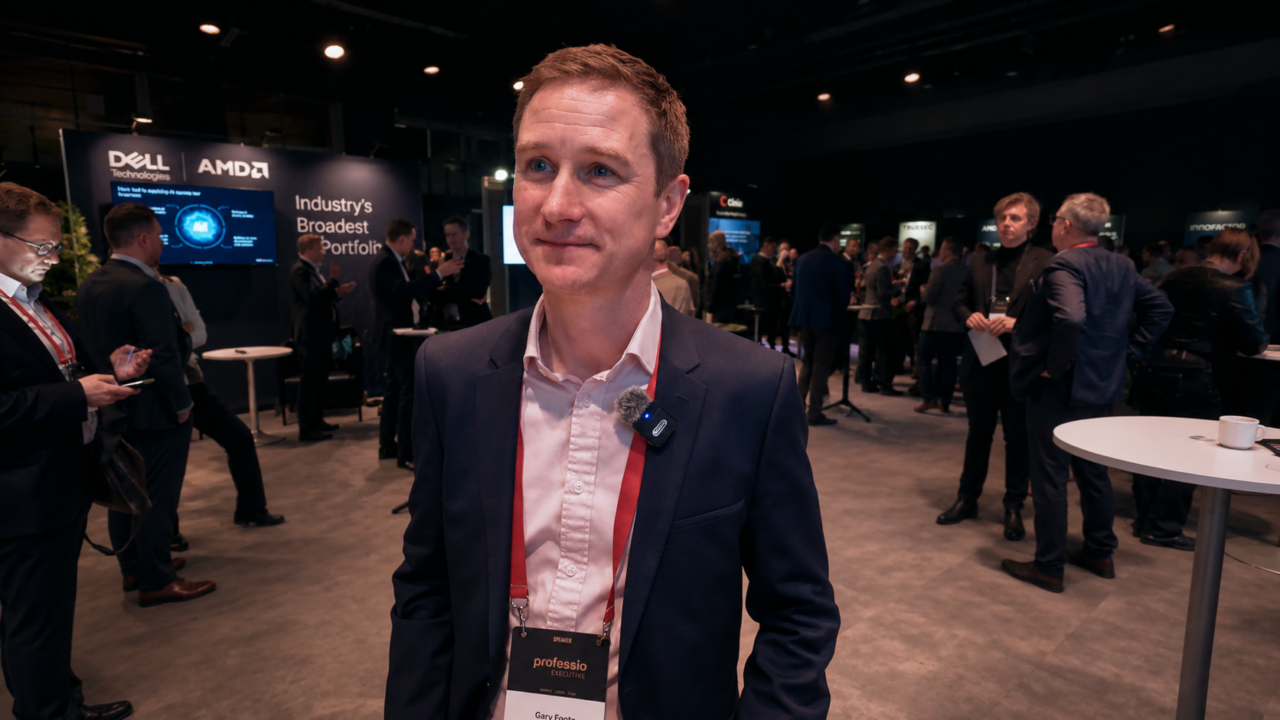
Speaking at CIO Nordic, Gary Foote shared how lessons from Formula One can help technology leaders strengthen resilience, elevate the CIO role and turn technology into measurable business impact.
We talk about Formula One being very advanced, but ultimately the challenges are the same.
Gary Foote on Formula One and the Future of Technology Leadership
Formula One is often associated with speed, cutting-edge engineering and split-second decisions.
But beneath the spectacle lies something that may feel surprisingly familiar to today’s CIOs and CISOs.
Speaking at CIO Nordic, Gary Foote argued that many of the challenges facing Formula One teams mirror those confronting modern enterprises. Behind every race is a complex technology organisation—one that depends on data, cybersecurity, operational resilience and constant innovation to perform under pressure.
The difference is simply the stage.
Watch the full video interview below.
From a technology service provision role towards a business impact role
Formula One may be one of the world’s most technologically advanced sports, but Gary Foote believes its lessons are highly relevant beyond the racetrack.
Behind the scenes, Formula One teams operate much like advanced manufacturing businesses, facing many of the same questions that enterprise technology leaders are grappling with today—from AI adoption and data strategies to cybersecurity and operational resilience.
“We talk about Formula One being very advanced, but ultimately, the challenges are the same.”
Rather than viewing technology as an isolated IT function, successful organisations increasingly recognise it as a driver of business performance. For today’s CIOs, that means the conversation is shifting from keeping systems running to enabling competitive advantage.
Resilience Requires CIOs and CISOs to Work as One
One of the strongest themes throughout Gary Foote’s keynote was the increasingly close relationship between technology and cybersecurity leadership.
As AI creates new opportunities for automation and resilience, it also gives attackers more sophisticated tools. Organisations must therefore prepare not only to prevent attacks, but also to respond effectively when incidents occur.
“The CIO and the CISO role are entwined now.”
Foote believes cybersecurity leadership should no longer be viewed as a supporting function. Instead, CIOs and CISOs should work as equal partners, combining technology, security and resilience into a single leadership capability.
The CIO Is Becoming a Business Leader
Technology failures in Formula One unfold in front of a global audience.
Every outage, delay or operational issue is immediately visible, creating enormous pressure to deliver flawless performance.
While most enterprises don’t operate under that level of scrutiny, Gary Foote believes the underlying shift is happening everywhere: technology is no longer simply supporting the business—it is shaping business outcomes.
“The CIO role is transformed from a technology service provision role over towards maybe a business impact role.”
That evolution is also changing how executive teams view technology leadership. Rather than focusing solely on infrastructure, CIOs are increasingly expected to influence revenue, competitiveness and long-term strategy alongside CEOs, CFOs and CMOs.
The Best CIOs Stay Ahead of the Curve
Looking ahead, Foote believes the most successful technology leaders will be those who never stop learning.
Technology is evolving too quickly for organisations to rely on yesterday’s knowledge. CIOs need to understand not only today’s tools, but also the technologies that will shape tomorrow’s competitive landscape.
“Stay ahead of technology trends.”
Events such as CIO Nordic help leaders exchange ideas, explore emerging technologies and understand how innovation can create measurable business value.
Data Only Creates Value When It Leads to Action
If there is one lesson Gary Foote believes every organisation can take from Formula One, it is the importance of data.
Formula One teams have spent decades refining how they collect, analyse and act on enormous volumes of information in real time. Success does not come from collecting more data—it comes from knowing how to use it.
Businesses today face the same challenge. Customer data, operational data and AI-generated insights all have the potential to improve performance, but only if organisations understand what matters and how to act on it.
“Understand the data that you have, understand where it needs to go, and understand what value you can bring.”
For Gary Foote, the goal is simple: move from insight to action. Organisations that can transform data into faster, better decisions will be better positioned to compete in an increasingly technology-driven world.
KEYNOTE
CIO | GM PERFORMANCE POWER UNITS | BCS FELLOW | 5 × CIO 100 HONOUREE (UK)
Gary Foote
CIO | GM PERFORMANCE POWER UNITS | BCS FELLOW | 5 × CIO 100 HONOUREE (UK)
Gary Foote
Gary Foote is the Chief Information Officer at GM Performance Power Units (GMPPU), the new high-performance technology venture created by General Motors and TWG Global to develop the next-generation Formula 1 power unit for the Cadillac F1 programme. He leads all global technology systems, data platforms and operational infrastructure required to build one of the most advanced power systems in motorsport.
With over two decades of experience in elite motorsport and technology leadership, Gary has held senior roles at Haas F1, Mercedes AMG Petronas, Brawn GP and Honda Racing F1, contributing to multiple World Championship victories. He is known for building high-performance digital operations, driving innovation under pressure, and scaling organisations through rapid growth and technological transformation. Gary is a a Fellow of the British Computing Society and a five-time UK CIO 100 honouree, and also a committed advocate for STEM education and serves as a trustee for Tove Learning Trust.